Means of Research-
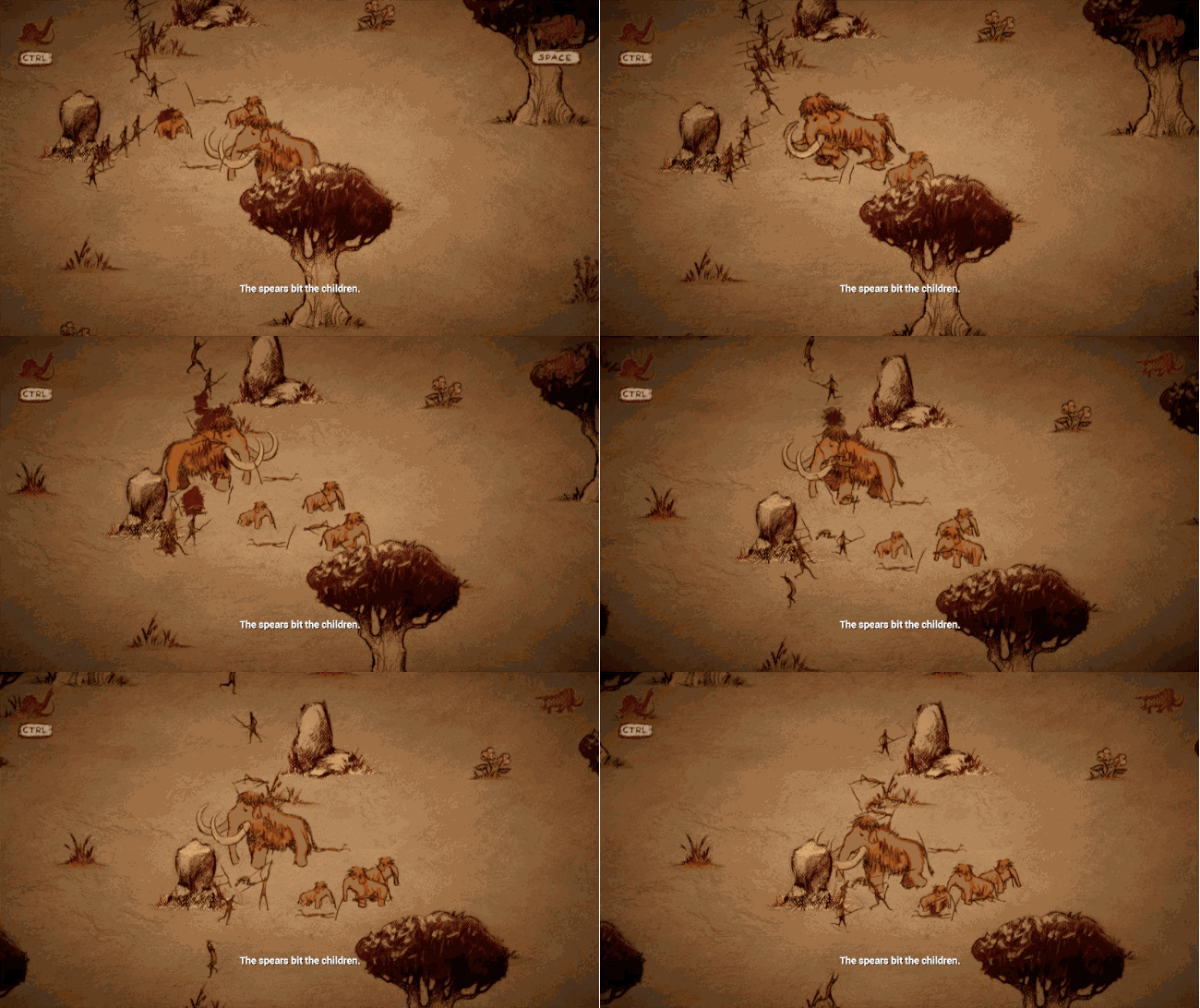
The main source for prehistory is archaeology, but some scholars are beginning to make more use of evidence from the natural and social sciences. This view has been articulated by advocates of deep history who, by relying to a lesser degree on written records, are blurring the distinction between the terms "history" and "prehistory".
The primary researchers into human prehistory are archaeologists and physical anthropologists who use excavation, geologic and geographic surveys, and other scientific analysis to reveal and interpret the nature and behavior of pre-literate and non-literate peoples. Human population geneticists and historical linguists are also providing valuable insight for these questions. Cultural anthropologists help provide context for societal interactions, by which objects of human origin pass among people, allowing an analysis of any article that arises in a human prehistoric context. Therefore, data about prehistory is provided by a wide variety of natural and social sciences, such as paleontology, biology, archaeology,palynology, geology, archaeoastronomy, comparative linguistics, anthropology, molecular genetics and many others.
Human prehistory differs from history not only in terms of its chronology but in the way it deals with the activities ofarchaeological cultures rather than named nations or individuals. Restricted to material processes, remains and artifacts rather than written records, prehistory is anonymous. Because of this, reference terms that prehistorians use, such asNeanderthal or Iron Age are modern labels with definitions sometimes subject to debate.
Paleolithic-
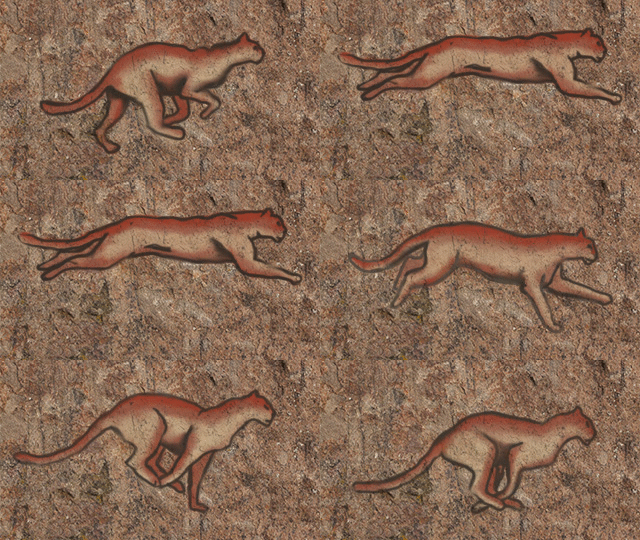
"Paleolithic" means "Old Stone Age," and begins with the first use of stone tools. The Paleolithic is the earliest period of the Stone Age.
The early part of the Paleolithic is called the Lower Paleolithic, which predates Homo sapiens, beginning with Homo habilis (and related species) and with the earliest stone tools, dated to around 2.5 million years ago. Evidence of control of fire by early humans during the Lower Paleolithic Era is uncertain and has at best limited scholarly support. The most widely accepted claim is that H. erectus or H. ergaster made fires between 790,000 and 690,000 BP in a site at Bnot Ya'akov Bridge, Israel. The use of fire enabled early humans to cook food, provide warmth, and have a light source at night.
Early Homo sapiens originated some 200,000 years ago, ushering in the Middle Paleolithic. Anatomic changes indicating modern language capacity also arise during the Middle Paleolithic. During the Middle Paleolithic Era, there is the first definitive evidence of human use of fire. Sites in Zambia have charred bone and wood that have been dated to 61,000 B.P. The systematic burial of the dead, music, early art, and the use of increasingly sophisticated multi-part tools are highlights of the Middle Paleolithic.
Throughout the Paleolithic, humans generally lived as nomadic hunter-gatherers. Hunter-gatherer societies tended to be very small and egalitarian, though hunter-gatherer societies with abundant resources or advanced food-storage techniques sometimes developed sedentary lifestyles with complex social structures such as chiefdoms, and social stratification. Long-distance contacts may have been established, as in the case of Indigenous Australian "highways."
Mesolithic-
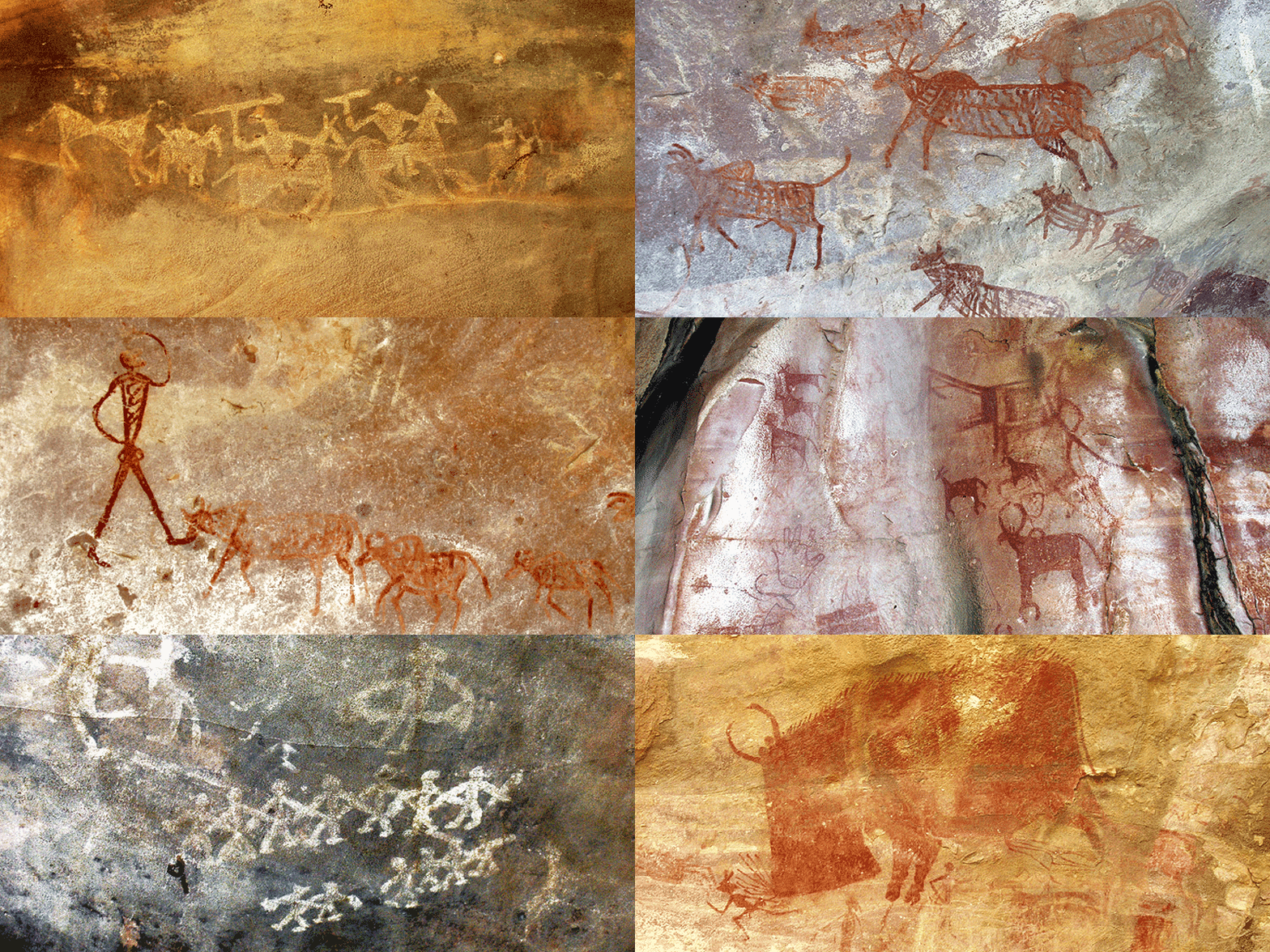
The "Mesolithic," or "Middle Stone Age" (from the Greek "mesos," "middle," and "lithos," "stone") was a period in the development of human technologybetween the Paleolithic and Neolithic periods of the Stone Age.
The Mesolithic period began at the end of the Pleistocene epoch, some 10,000 BP, and ended with the introduction of agriculture, the date of which varied by geographic region. In some areas, such as the Near East, agriculture was already underway by the end of the Pleistocene, and there the Mesolithic is short and poorly defined. In areas with limited glacial impact, the term "Epipaleolithic" is sometimes preferred.
Regions that experienced greater environmental effects as the last ice ageended have a much more evident Mesolithic era, lasting millennia. In Northern Europe, societies were able to live well on rich food supplies from the marshlands fostered by the warmer climate. Such conditions produced distinctive human behaviours that are preserved in the material record, such as the Maglemosian and Azilian cultures. These conditions also delayed the coming of the Neolithic until as late as 4000 BC (6,000 BP) in northern Europe.
Remains from this period are few and far between, often limited to middens. In forested areas, the first signs of deforestationhave been found, although this would only begin in earnest during the Neolithic, when more space was needed foragriculture.
The Mesolithic is characterized in most areas by small composite flint tools — microliths and microburins. Fishing tackle, stone adzes and wooden objects, e.g. canoes and bows, have been found at some sites. These technologies first occur inAfrica, associated with the Azilian cultures, before spreading to Europe through the Ibero-Maurusian culture of Northern Africa and the Kebaran culture of the Levant. Independent discovery is not always ruled out.


Neolithic-
"Neolithic" means "New Stone Age." Unlike the Paleolithic, when more than one human species existed, only one human species (Homo sapiens sapiens) reached the Neolithic. Homo floresiensis may have survived right up to the very dawn of the Neolithic, about 12,200 years ago. This was a period of primitive technologicaland social development. It began about 10,200 BC in some parts of the Middle East, and later in other parts of the world and ended between 4,500 and 2,000 BC. The Neolithic is a progression of behavioral and cultural characteristics and changes, including the use of wild and domestic crops and of domesticated animals.
Early Neolithic farming was limited to a narrow range of plants, both wild and domesticated, which included einkorn wheat, millet and spelt, and the keeping ofdogs, sheep and goats. By about 6,900–6,400 BC, it included domesticated cattleand pigs, the establishment of permanently or seasonally inhabited settlements, and the use of pottery. The Neolithic period saw the development of early villages,agriculture, animal domestication, tools and the onset of the earliest recorded incidents of warfare. The Neolithic era commenced with the beginning of farming, which produced the "Neolithic Revolution". It ended when metal tools became widespread (in the Copper Age or Bronze Age; or, in some geographical regions, in the Iron Age).The term Neolithic is commonly used in the Old World, as its application to cultures in theAmericas and Oceania that did not fully develop metal-working technology raises problems.
Settlements became more permanent with some having circular houses with single rooms made ofmudbrick. Settlements might have a surrounding stone wall to keep domesticated animals in and protect the inhabitants from other tribes. Later settlements have rectangular mud-brick houses where the family lived together in single or multiple rooms. Burial findings suggest an ancestor cult where people preserved skulls of the dead. The Vinča culture may have created the earliest system of writing.The megalithic temple complexes of Ġgantija are notable for their gigantic structures. Although some late Eurasian Neolithic societies formed complex stratified chiefdoms or even states, states evolved in Eurasia only with the rise of metallurgy, and most Neolithic societies one the whole were relatively simple and egalitarian. Most clothing appears to have been made of animal skins, as indicated by finds of large numbers of bone and antler pins which are ideal for fastening leather. Wool cloth and linen might have become available during the later Neolithic, as suggested by finds of perforated stones which (depending on size) may have served as spindle whorls orloom weights.
Chalcolithic-
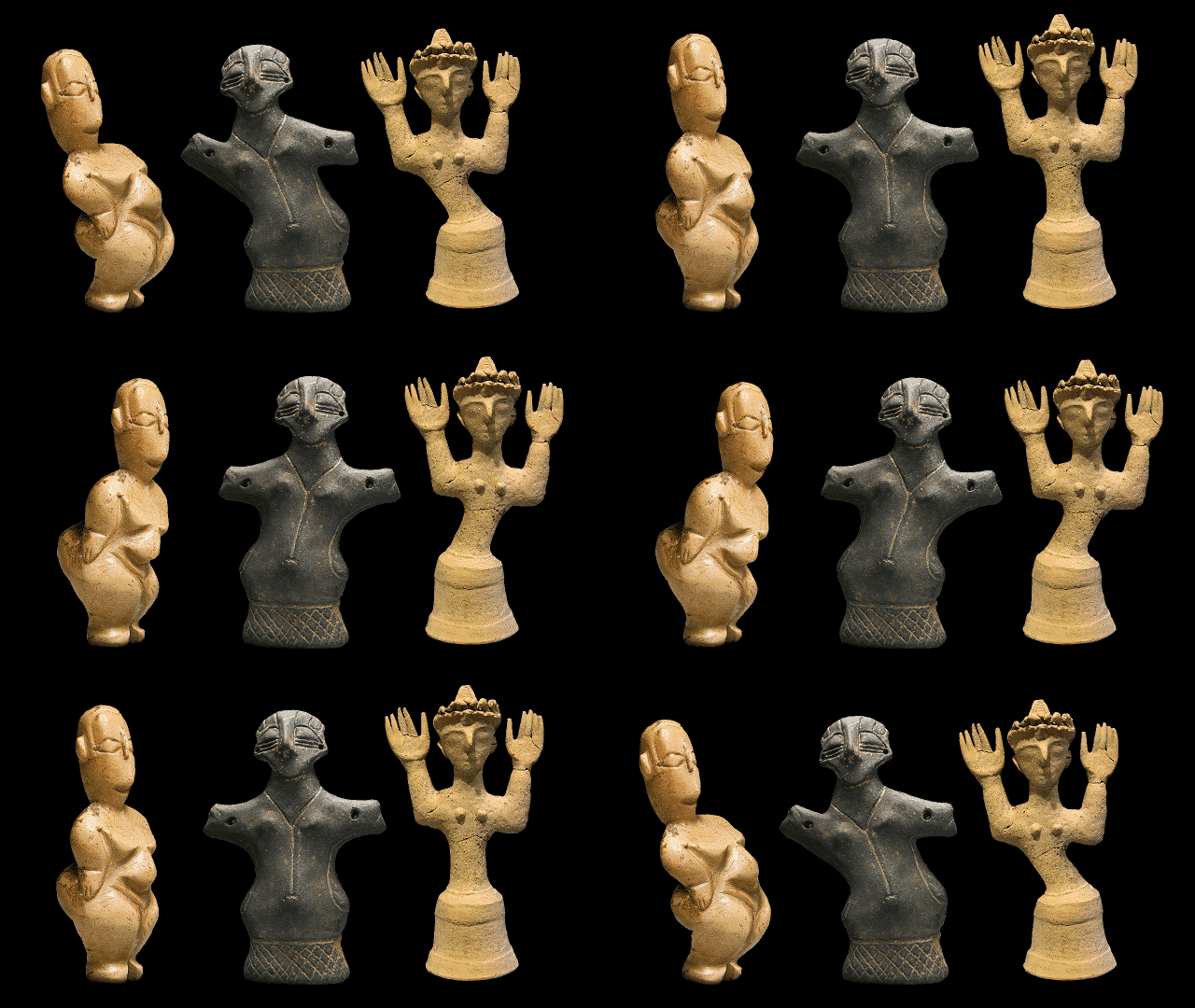
In Old World archaeology, the "Chalcolithic", "Eneolithic" or "Copper Age" refers to a transitional period where early copper metallurgy appeared alongside the widespread use of stone tools. During this period, some weapons and tools were made of copper. This period was still largely Neolithic in character. It is a phase of the Bronze Age before it was discovered that adding tin to copper formed the harderbronze. The Copper Age was originally defined as a transition between the Neolithicand the Bronze Age. However, because it is characterized by the use of metals, the Copper Age is considered a part of the Bronze Age rather than the Stone Age. An archaeological site in Serbia contains the oldest securely dated evidence of copper making at high temperature, from 7,500 years ago. The find in June 2010 extends the known record of copper smelting by about 800 years, and suggests that copper smelting may have been invented in separate parts of Asia and Europe at that time rather than spreading from a single source. The emergence of metallurgy may have occurred first in the Fertile Crescent, where it gave rise to the Bronze Age in the 4th millennium BC (the traditional view), though finds from the Vinča culture in Europe have now been securely dated to slightly earlier than those of the Fertile Crescent. Timna Valley contains evidence of copper mining 9,000 to 7,000 years ago. The process of transition from Neolithic to Chalcolithic in the Middle East is characterized in archaeological stone tool assemblages by a decline in high quality raw material procurement and use. North Africa and the Nile Valley imported its iron technology from the Near East and followed the Near Eastern course of Bronze Age and Iron Age development. However the Iron Age and Bronze Age occurred simultaneously in much of Africa.

Bronze Age-
The Bronze Age is the earliest period in which some civilisations have reached the end of prehistory, by introducing written records. The Bronze Age or parts thereof are thus considered to be part of prehistory only for the regions and civilisations who adopted or developed a system of keeping written records during later periods. Theinvention of writing coincides in some areas with the early beginnings of the Bronze Age. Soon after the appearance of writing, people started creating texts including written accounts of events and records of administrative matters.
The term Bronze Age refers to a period in human cultural development when the most advanced metalworking (at least in systematic and widespread use) included techniques for smelting copper and tin from naturally occurring outcroppings of ores, and then combining them to cast bronze. These naturally occurring ores typically included arsenic as a common impurity. Copper/tin ores are rare, as reflected in the fact that there were no tin bronzes in Western Asia before 3000 BC. The Bronze Age forms part of the three-age system for prehistoric societies. In this system, it follows the Neolithic in some areas of the world.
While copper is a common ore, deposits of tin are rare in the Old World, and often had to be traded or carried considerable distances from the few mines, stimulating the creation of extensive trading routes. In many areas as far apart as China and England, the valuable new material was used for weapons but for a long time apparently not available for agricultural tools. Much of it seems to have hoarded by social elites, and sometimes deposited in extravagant quantities, from Chinese ritual bronzes and Indian copper hoards to European hoards of unused axe-heads.
By the end of the Bronze Age large states, which are often called empires, had arisen in Egypt, China, Anatolia (the Hittites) and Mesopotamia, all of them literate.

Iron Age and Classical antiquity-
The Iron Age is not part of prehistory for all civilisations who had introduced written records during the Bronze Age. Most remaining civilisations did so during the Iron Age, often through conquest by the empires, which continued to expand during this period. For example, in most of Europe conquest by the Roman Empire means that the term Iron Age is replaced by "Roman", "Gallo-Roman" and similar terms after the conquest.
In archaeology, the Iron Age refers to the advent of ferrous metallurgy. The adoption of iron coincided with other changes in some past cultures, often including more sophisticated agricultural practices, religious beliefs and artistic styles, which makes the archaeological Iron Age coincide with the "Axial Age" in the history of philosophy. Although iron ore is common, the metalworking techniques necessary to use iron are very different from those needed for the metal used earlier, and iron was slow-spreading and for long mainly used for weapons, while bronze remained typical for tools, as well as art.
Classical antiquity (also the classical era, classical period or classical age) is a broad term for a long period of cultural history centered on theMediterranean Sea, comprising the interlocking civilizations of ancient Greeceand ancient Rome, collectively known as the Greco-Roman world. It is the period in which Greek and Roman society flourished and wielded great influence throughout Europe, North Africa and Southwestern Asia.
Conventionally, it is taken to begin with the earliest-recorded Epic Greekpoetry of Homer (8th–7th century BC), and continues through the emergence of Christianity and the decline of the Roman Empire (5th century AD). It ends with the dissolution of classical culture at the close of Late Antiquity (300–600), blending into the Early Middle Ages (600–1000). Such a wide sampling of history and territory covers many disparate cultures and periods. "Classical antiquity" may refer also to an idealised vision among later people of what was, in Edgar Allan Poe's words, "the glory that was Greece, and the grandeur that was Rome."
The culture of the ancient Greeks, together with some influences from theancient Near East, was the basis of art, philosophy, society, and educational ideals, until the Roman imperial period. The Romans preserved, imitated andspread over Europe these ideals until they were able to competitively rival the Greek culture, as the Latin language became widespread and the classical world became bilingual, Greek and Latin. This Greco-Roman cultural foundation has been immensely influential on the language, politics, educational systems, philosophy, science, art, and architecture of the modern world: From the surviving fragments of classical antiquity, a revival movement was gradually formed from the 14th century onwards which came to be known later in Europe as the Renaissance, and again resurgent during various neo-classical revivals in the 18th and 19th centuries.